
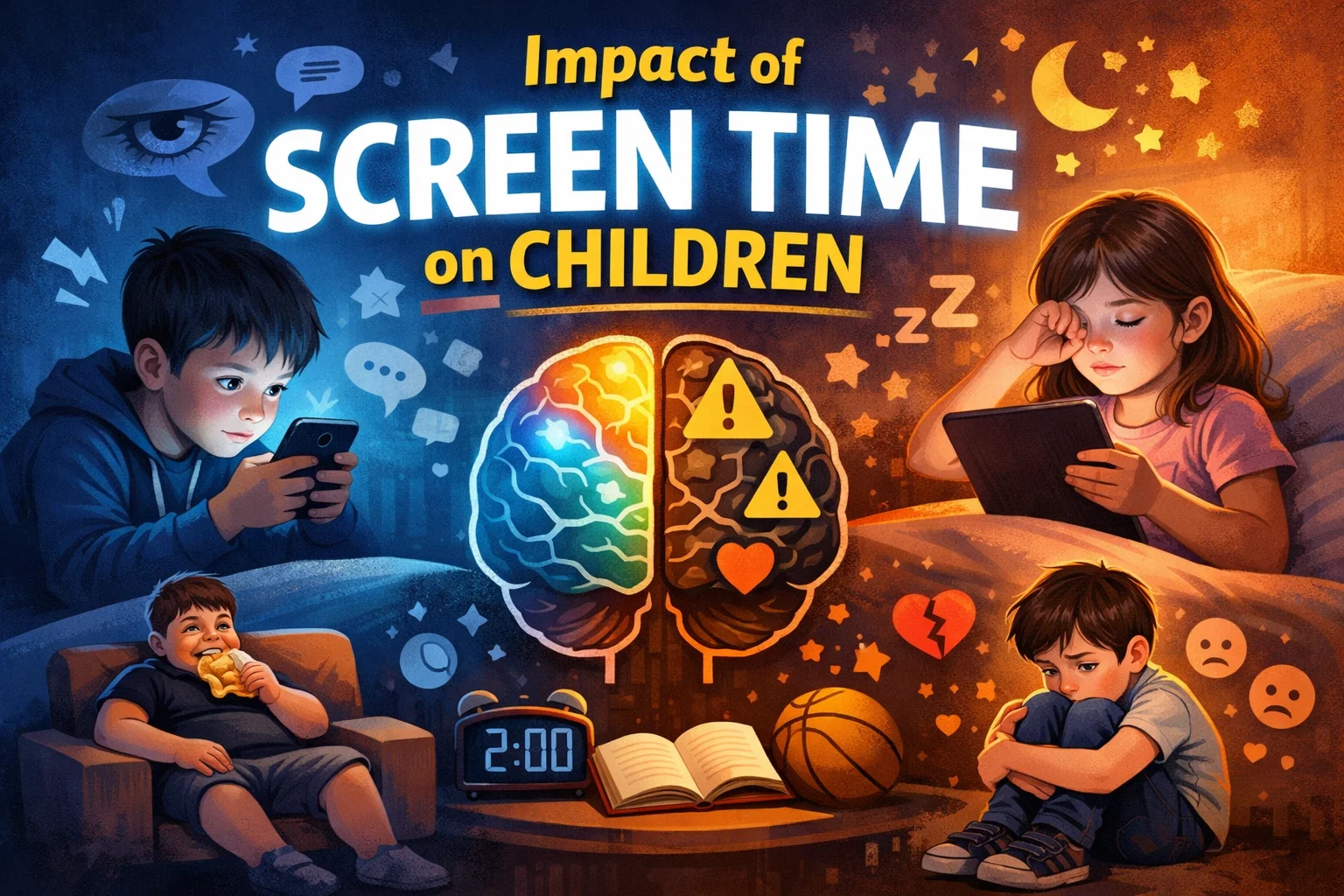
Impact of Screen Time on Children – 9 Powerful Truths Every Parent Must Know
Introduction: Screens in a Child’s World
Screens are everywhere—smartphones, tablets, televisions, laptops, and even smart boards in classrooms. For today’s children, digital exposure begins early, often before they can speak in full sentences. Naturally, this raises an important question for parents and educators alike: what is the real impact of screen time on children?
The impact of screen time on children is not simply good or bad. Instead, it depends on how much, how often, and how thoughtfully screens are used. When balanced well, technology can support learning. However, excessive or unstructured screen exposure can interfere with physical health, learning abilities, emotional growth, and sleep routines.
During early childhood—especially the preschool years—children learn best through movement, play, exploration, and human interaction. Recognizing this, institutions like Minnieland adopt a balanced learning approach where technology supports learning but never replaces hands-on experiences.
In this detailed guide, we’ll explore the impact of screen time on children across physical, cognitive, social, emotional, and sleep-related domains, while also offering practical strategies for parents and educators.
Understanding Screen Time in Early Childhood
What Counts as Screen Time?
Screen time includes any activity where a child engages with a digital screen. This may involve:
- Watching cartoons or videos on TV or mobile devices
- Playing games on tablets or smartphones
- Using educational apps
- Video calls with family members
- Passive viewing or interactive digital activities
It’s important to note that not all screen time is equal. Interactive, supervised, and educational content has a different impact of screen time on children compared to passive, prolonged viewing.
Recommended Screen Time by Age
According to pediatric experts and organizations such as the World Health Organization (WHO) and American Academy of Pediatrics, general guidelines include:
| Age Group | Recommended Screen Time |
|---|---|
| Under 2 years | Avoid screen time (except video calls) |
| 2–5 years | Maximum 1 hour per day, supervised |
| 6+ years | Consistent limits with balanced activities |
You can explore more global recommendations on child development at World Health Organization (WHO): https://www.who.int
These guidelines aim to minimize the negative impact of screen time on children while encouraging healthier alternatives.
Impact of Screen Time on Children’s Physical Well-being
Reduced Physical Activity
One of the most visible effects of excessive screen use is reduced physical movement. Children who spend long hours on screens often miss out on:
- Outdoor play
- Running, jumping, and climbing
- Developing motor coordination
Physical play strengthens muscles, improves balance, and builds endurance. When screen time replaces active play, the impact of screen time on children can include slower physical development and lower energy levels.

Effects on Eyesight and Posture
Extended screen use may strain young eyes, leading to:
- Eye fatigue
- Dry eyes
- Difficulty focusing
In addition, poor posture while using devices—such as slouching or bending the neck—can affect spinal alignment. Over time, this physical impact of screen time on children may result in discomfort and long-term posture issues.

Screen Time and Childhood Obesity
Sedentary screen habits, combined with snacking during screen use, may contribute to unhealthy weight gain. Limited movement affects metabolism and overall fitness, making it crucial to balance digital time with active routines.
Impact of Screen Time on Children’s Cognitive Development
Attention Span and Focus
Research suggests that excessive passive screen exposure may shorten attention spans. Fast-paced visuals and constant stimulation can make it harder for children to focus on slower, real-world activities like reading or problem-solving.
The impact of screen time on children’s attention becomes especially noticeable when screens replace interactive play or guided learning.
Learning Through Interaction vs Screens
Children learn best by:
- Touching objects
- Asking questions
- Exploring environments
- Engaging in conversations
Screens, when used alone, cannot replicate these experiences. While educational apps may support learning, they are most effective when combined with hands-on activities and adult guidance.
Memory and Problem-Solving Skills
Real-world play encourages children to think creatively, solve problems, and remember experiences. Over-reliance on screens can limit these opportunities, influencing the overall impact of screen time on children’s cognitive growth.
Impact of Screen Time on Children’s Social and Emotional Growth
Face-to-Face Interaction and Empathy
Social skills develop through human interaction. Children learn empathy, body language, and communication by observing and engaging with others.
Excessive screen use may reduce these interactions, making it harder for children to:
- Understand emotions
- Respond appropriately in social situations
- Build meaningful relationships

Emotional Regulation and Behavior
Children exposed to overstimulating content may struggle with emotional regulation. This can appear as:
- Increased irritability
- Difficulty calming down
- Frustration when screens are removed
The emotional impact of screen time on children highlights the importance of age-appropriate and limited usage.
Confidence and Communication Skills
Talking, storytelling, and role-playing help children express themselves confidently. When screens dominate daily routines, opportunities for verbal communication may decrease, affecting language development and self-expression.
Impact of Screen Time on Children’s Sleep Patterns
Blue Light and Sleep Cycles
Screens emit blue light, which can interfere with melatonin production—the hormone responsible for sleep. Exposure before bedtime may delay sleep onset and reduce sleep quality.
Bedtime Routines and Screen Exposure
Poor sleep affects mood, memory, and attention. A consistent bedtime routine without screens supports healthier sleep patterns and reduces the negative impact of screen time on children’s daily functioning.
Positive Uses of Screen Time When Balanced
Educational Content and Guided Use
Not all screen time is harmful. High-quality educational content, when used briefly and with adult supervision, can:
- Reinforce concepts
- Support language learning
- Encourage curiosity
Technology as a Learning Tool
In classrooms technology is used intentionally—to complement storytelling, activities, and experiential learning rather than replacing them.
Encouraging Healthy Screen Habits at Home
Setting Boundaries and Limits
Parents can reduce the negative impact of screen time on children by:
- Setting daily screen-time limits
- Avoiding screens during meals
- Keeping screens out of bedrooms
Role of Parents as Digital Role Models
Children imitate adults. When parents demonstrate balanced digital habits, children are more likely to follow suit. Simple habits like family reading time or outdoor activities can make a big difference.
Balanced Learning Approach
Technology Supporting Experiential Learning
- Screens never replace hands-on activities
- Learning is play-based and interactive
- Technology supports, not dominates, the curriculum
Focus on Holistic Child Development
The focus remains on physical, cognitive, emotional, and social development—ensuring children grow confidently both on and off the screen.
Frequently Asked Questions (FAQs)
1. What is the ideal screen time for preschool children?
Experts recommend no more than one hour per day of supervised, high-quality content.
2. Is all screen time harmful for children?
No. The impact of screen time on children depends on content quality, duration, and supervision.
3. Can educational apps replace traditional learning?
No. Apps should support—not replace—hands-on learning and real-world interaction.
4. How does screen time affect sleep in children?
Excessive or late-night screen use can disrupt sleep cycles and reduce sleep quality.
5. What are signs of excessive screen time?
Irritability, reduced physical activity, poor sleep, and difficulty focusing may indicate overuse.
6. How can parents reduce screen dependence?
Encourage outdoor play, reading, creative activities, and set consistent digital boundaries.
Conclusion: A Thoughtful Balance for Growing Minds
Screens aren’t the problem—imbalance is. The impact of screen time on children becomes harmful only when digital exposure replaces movement, play, interaction, and rest. With mindful limits, age-appropriate content, and active parental involvement, technology can be a supportive tool rather than a distraction.
If you’re seeking a preschool that understands the importance of balanced development, Minnieland provides an environment where children learn, play, and grow—both on and off the screen.