
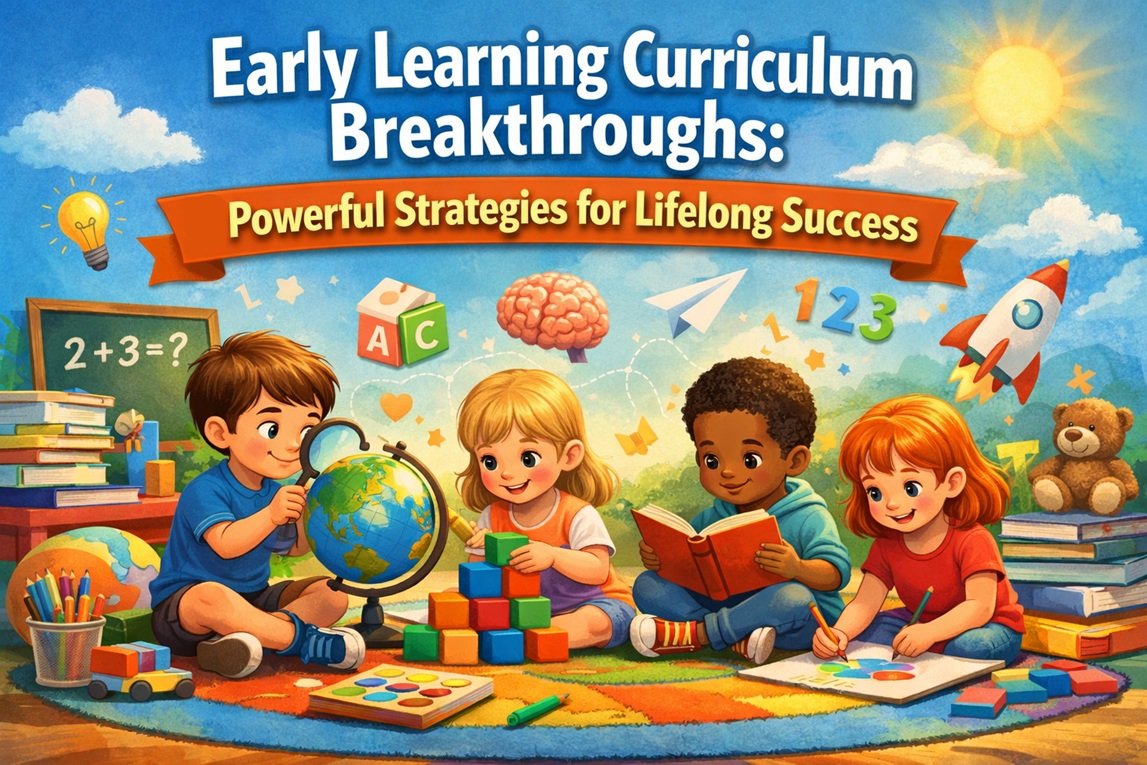
5 Early Learning Curriculum Every Parent Must Know…
Introduction to Early Learning Curriculum
An early learning curriculum is more than a collection of lessons for young children—it’s the blueprint for how minds grow, habits form, and curiosity takes root. In the first five years of life, children experience rapid brain development that shapes their ability to learn, socialize, and adapt. Because of this, educators and policymakers increasingly recognize that investing in a high-quality early learning curriculum isn’t optional—it’s essential.
Simply put, a strong early learning curriculum sets the tone for everything that follows. When designed thoughtfully, it balances structure with flexibility, academics with play, and guidance with exploration. Kids don’t just memorize facts; they learn how to think, ask questions, and collaborate. And let’s be honest—when learning feels joyful, children are more likely to stay engaged for the long haul.
This article dives deep into how an early learning curriculum works, why it matters, and how it can be designed and implemented effectively. Drawing on educational research, classroom experience, and global best practices, we’ll unpack strategies that truly make a difference. Whether you’re an educator, parent, or policymaker, you’ll find practical insights you can actually use.
The Science Behind Early Learning Curriculum
Brain Development in Early Years

Neuroscience shows that by age five, nearly 90% of a child’s brain development is complete. That’s huge. During this period, neural connections form at lightning speed, influenced directly by a child’s experiences. A well-structured early learning curriculum leverages this window by providing rich, meaningful interactions that stimulate cognitive growth.
Research consistently highlights that children exposed to high-quality early education demonstrate better language skills, improved executive functioning, and stronger emotional regulation. According to global education frameworks referenced by organizations like UNESCO, early childhood education lays the groundwork for equity and lifelong learning .
Role of Play-Based Learning

Here’s the kicker: play isn’t a break from learning—it is learning. Play-based approaches embedded within an early learning curriculum allow children to experiment, negotiate, and problem-solve naturally. Through guided play, educators can introduce math concepts, language skills, and social norms without making learning feel forced.
Play also encourages resilience. When kids build a tower that falls down, they don’t give up—they try again. That persistence, developed early, becomes a lifelong asset.
ALSO READ – 10 Best Kindergarten Activities Ideas for Young Children Parents Must Know..
Core Components of an Effective Early Learning Curriculum
A comprehensive early learning curriculum integrates multiple developmental domains. Let’s break them down.
Cognitive Development
Cognitive skills include memory, attention, and reasoning. Activities like puzzles, storytelling, and exploratory science help children make sense of the world. Importantly, learning should be scaffolded—building on what children already know.
Social and Emotional Learning
Children learn how to share, empathize, and manage emotions through daily interactions. An effective early learning curriculum explicitly supports social-emotional learning by encouraging collaboration, role-play, and reflection.
Language and Literacy
From phonemic awareness to vocabulary building, language development is central. Reading aloud, singing, and conversation-rich classrooms accelerate literacy skills. Kids who hear more words early on tend to read better later—it’s that simple.
Physical Development
Gross and fine motor skills matter, too. Movement-based learning, outdoor play, and hands-on activities strengthen coordination and overall health, supporting academic readiness.
ALSO READ – 8 Toddler Activities at Home for Growth & Brain Development
Designing an Inclusive Early Learning Curriculum
Cultural Responsiveness
An inclusive early learning curriculum reflects the diverse backgrounds of children. Stories, examples, and materials should mirror real-life experiences, fostering a sense of belonging.
Differentiated Instruction
Not all children learn the same way, and that’s okay. Differentiation allows educators to adapt content, pace, and methods to meet individual needs without lowering expectations.
Special Needs Integration
Inclusive classrooms benefit everyone. When children with special needs are supported through individualized strategies, all learners gain empathy and collaboration skills.
Implementing Early Learning Curriculum in Schools and Homes
Teacher Preparation
Teachers are the heartbeat of any curriculum. Ongoing professional development ensures educators understand child development, assessment strategies, and inclusive practices.
Family Engagement
Learning doesn’t stop at the classroom door. When families reinforce concepts at home—through reading, conversation, or play—children thrive. A strong early learning curriculum actively involves parents as partners.
Learning Environments
Safe, stimulating environments matter. Flexible spaces, natural light, and accessible materials invite exploration and creativity.
ALSO READ – 9 Powerful Types of Play Based Learning Every Parent Must Know..
Measuring Success and Continuous Improvement
Assessment Methods
Assessment in early education should be observational and formative. Instead of high-stakes testing, educators use portfolios, checklists, and anecdotal records to track progress.
Data-Driven Adjustments
Continuous improvement relies on data. By analyzing outcomes, educators can refine their early learning curriculum to better meet children’s needs.
Frequently Asked Questions (FAQs)
1. What is an early learning curriculum?
It’s a structured framework guiding learning experiences for young children, focusing on cognitive, social, emotional, and physical development.
2. Why is early learning curriculum important?
Because early experiences shape brain development, behavior, and lifelong learning outcomes.
3. At what age should early learning curriculum begin?
From birth. Even infants benefit from responsive, language-rich environments.
4. How does play fit into early learning curriculum?
Play-based learning promotes problem-solving, creativity, and social skills in natural ways.
5. Can parents support early learning curriculum at home?
Absolutely. Reading, talking, and playing with children reinforce classroom learning.
6. How is success measured in early learning curriculum?
Through observations, developmental milestones, and continuous assessment—not standardized tests.
Conclusion
A thoughtfully designed early learning curriculum is one of the most powerful investments society can make. It nurtures curiosity, builds resilience, and equips children with skills they’ll carry for life. By grounding curriculum design in science, inclusivity, and real-world practice, we don’t just teach children—we empower them.
As research and experience show, when early learning gets it right, everything else tends to fall into place. And honestly, that’s a future worth building.